

Excel is Not an MES - Integrating Plex into Your Operations
Why Spreadsheets Limit Scaling in Manufacturing
For many manufacturers, Excel spreadsheets are the key to managing production schedules, quality records, inventory tracking, downtime logs, labor reporting, and performance metrics. While spreadsheets can be effective in the early stages of growth, they often become a barrier to efficiency as operations become more complex.
As organizations expand, add facilities, increase production volume, or face stricter compliance requirements, spreadsheet-based processes create data silos, inconsistent reporting, version control issues, and limited visibility into your operations. Leaders are often forced to make decisions using outdated or incomplete information.
While spreadsheets may support basic tracking, they cannot provide the real-time visibility, process control, and traceability required for modern manufacturing. Plex Manufacturing System (MES) is a scalable solution that helps manufacturers replace disconnected processes with a centralized platform designed specifically in production environments.
It’s Time to Move On From Spreadsheets
Manufacturers using spreadsheets often experience:
- Multiple versions of the same data across departments
- Manual data entry errors
- Delayed visibility into production performance
- Limited traceability for quality and compliance requirements
- Difficulty standardizing processes across shifts or facilities
- Time-consuming reporting and KPI tracking
- Lack of real-time visibility into production issues
- Challenges scaling operations as the business grows
It’s often a time-consuming process to gather information that could be spent acting on analytics. Teams may wait days or weeks for reports that could be available instantly. These inefficiencies increase operating costs and make continuous improvement difficult to execute.
How Plex MES Creates Connected Manufacturing Operations
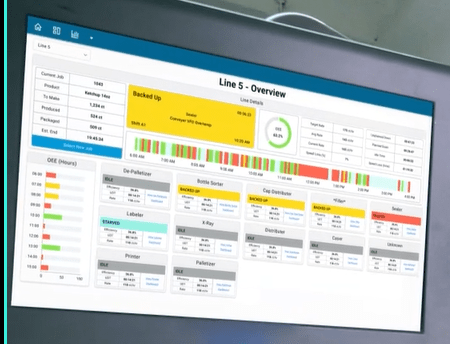
Plex MES provides a centralized platform that connects people, processes, and production data in real time. Instead of relying on disconnected spreadsheets, Plex captures information directly from the manufacturing floor, creating a single source of truth for production, quality, inventory, labor, and performance metrics.
These capabilities help manufacturers:
- Reduce manual reporting requirements
- Identify production issues fasterImprove first-pass quality
- Standardize production across facilities
- Make decisions using accurate production data
What sets Plex apart is its cloud-native architecture and deep manufacturing focus. Plex was
designed specifically for manufacturers, allowing organizations to modernize operations without
maintaining complex on-premise infrastructure. Manufacturers gain greater visibility,
consistency, and scalability while reducing manual administrative work.
Contact a FactoryXT Solutions Consultant
Engineered to Run Your Manufacturing Operations
Plex Manufacturing Execution System (MES) helps manufacturers replace spreadsheet-driven processes with connected, actionable operational management. By digitizing production workflows and centralizing manufacturing data, Plex enables faster decision-making, improved quality, stronger traceability, and greater operational efficiency.
Excel is a valuable business tool, but it was never designed to run a manufacturing operation. Manufacturers that continue relying on spreadsheets for critical production processes often face visibility gaps, manual errors, and scalability challenges. A modern MES like Plex provides real- time data, process control, and operational insight required to support growth and continuous improvement.
How the Industrial Solutions Network Helps
The Industrial Solutions Network supports manufacturers and end users in evaluating how modern manufacturing software like Plex MES can provide actionable data and operational insight to support continuous improvement.
Our solutions consultants can help teams understand the capabilities, software implementation, and help organizations to run their processes with improved quality and operational efficiency.